You’ve cut your energy use. You sort your waste. You may hold a LEED, BOMA BEST, or WELL certification, and you publish a solid ESG report every year.
Well done. That’s real work.
And let’s be clear: many of these investments are driven primarily by economic realities. Cutting electricity use, optimizing heating, and limiting water waste also reduce the operating costs of your building. And that’s a very good thing.
Now try a small test. Tomorrow morning, stop in your lobby. Watch people walk by: your employees, your tenants, your visitors. Ask yourself: what do they see of all that effort?
In most buildings, the answer is: almost nothing.
They may have noticed your LEED or BOMA BEST plaque at the entrance. But do they know what it means? More importantly, do they know which concrete steps helped your team earn that recognition?
Your Best Efforts Are Often Invisible
Sustainability initiatives often hide in places nobody visits. In the mechanical room. In a spreadsheet. In a 40-page report few people finish reading.
That’s nobody’s fault. An efficient heat pump runs quietly, and that is exactly its job. But that quiet comes at a cost: what people cannot see, they find hard to believe.
Your employees hear about your environmental commitment once a year in a presentation. Tenants read one line in a newsletter. Visitors know nothing about it.
Meanwhile, expectations keep rising. People no longer ask only, “Do you have a plan?” They ask, “Can I see it?”
The Gap Between Saying and Showing
Think about the last time a place truly made you feel it cared about the planet.
It probably wasn’t a poster. It was something you saw with your own eyes. Compost bins people actually used. A green roof. A laneway filled with flowers.
That is where an indoor aquaponic garden changes things.
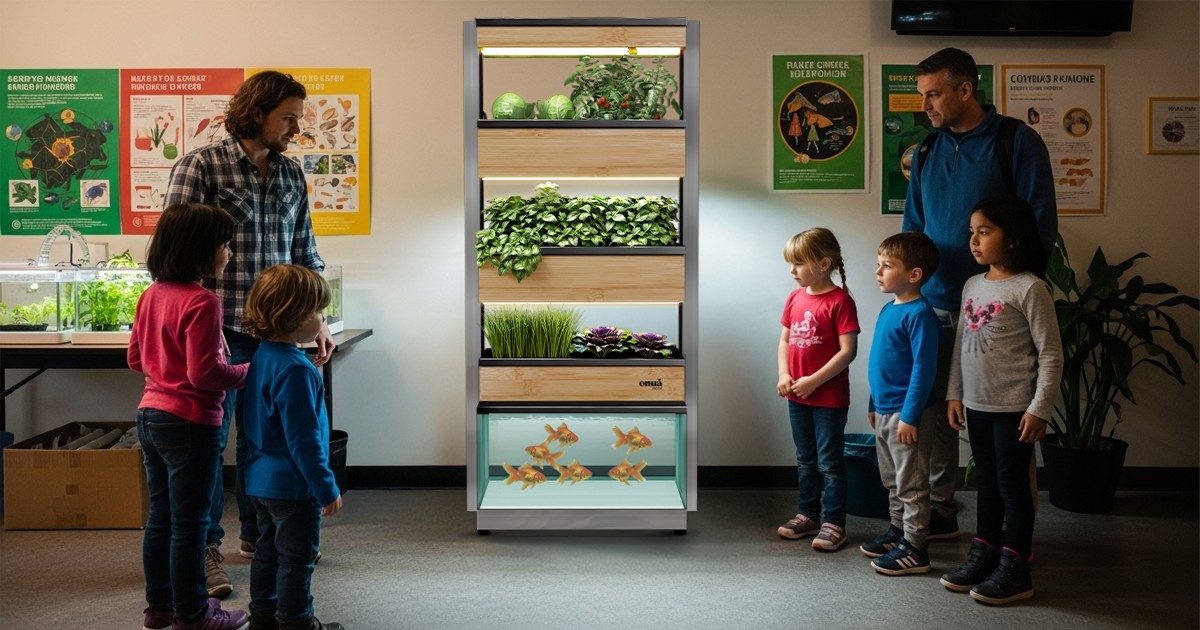
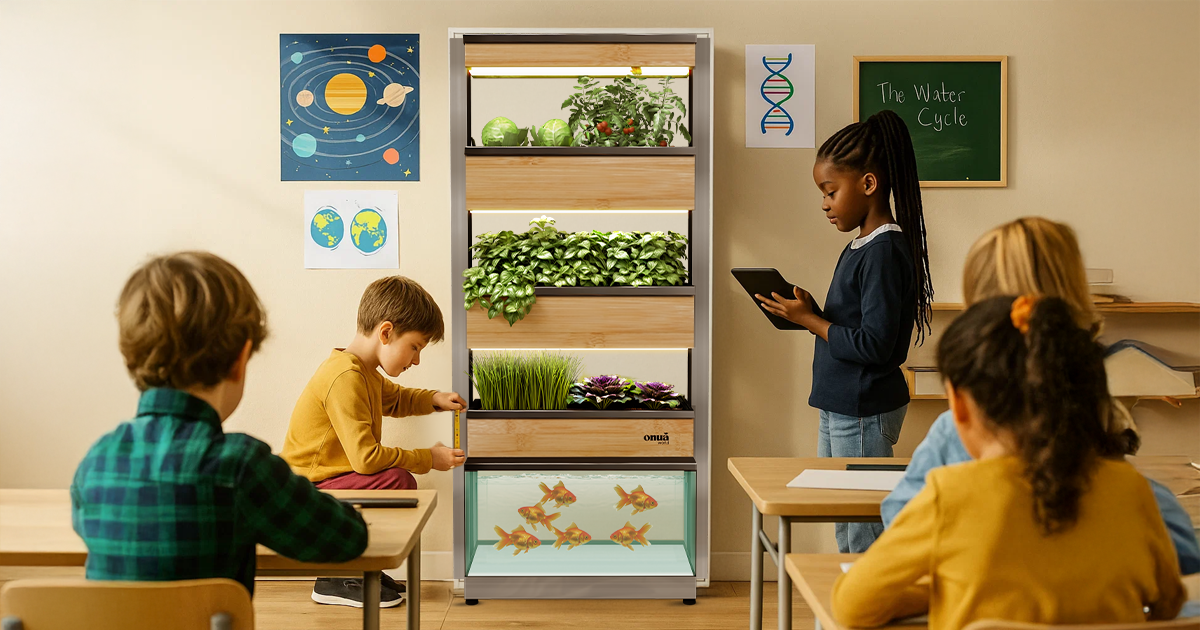
It sits right there in the lobby, visible every day. Fish swim in the aquarium. Plants grow above it. Water circulates between the two in a closed loop. People stop, ask questions, and take photos.
The garden becomes something people can see, touch, and share. Not just once a year in a report, but every morning on their way into the building.
And why stop at the garden? A sign, QR code, or guided visit can help occupants discover your building’s other environmental initiatives: energy savings, water management, waste recovery practices, and certifications.
The garden then becomes a living showcase of your environmental commitments.
You have already invested in improving your building. Why not let the people who use it every day know what you have accomplished?
What About Certifications?
Let’s be frank, because this matters: a garden alone will not earn your building a certification. Your team and accredited advisors build the submission, credit by credit.
But several certification programs recognize benefits that an indoor garden can bring:
- WELL: the Nourishment concept includes criteria related to food production and nutrition education. Check which version applies to the project.
- Fitwel: strategies may relate to occupants’ access to a fruit and vegetable garden, depending on the building type and program requirements.
- LEED: innovation credit possibilities depend on the project’s characteristics and documentation; recognition is never automatic.
Each program has its own rules, thresholds, and minimum area requirements. One garden will not necessarily meet every criterion.
But beyond certifications, there is another opportunity: help occupants understand what your environmental commitments actually mean.
What a Living Garden Changes Day to Day
Beyond certification points, here is what a garden in a shared space can make possible:
- A conversation that starts naturally. Fish, plants, and the ecosystem give people something to ask about. Your commitment becomes a talking point, not another document filed away.
- Tangible proof for site visits and reports. A photo of a real garden can illustrate an environmental initiative in the building’s communications.
- Shared moments. A basil harvest handed out to employees. A workshop for tenants. Initiatives that can help build connections.
- Little extra work for your team. The management app monitors factors including pH and water level; an Onuà World partner can handle maintenance.
Where to Start
You do not need to rethink everything. Start with three simple questions:
- Where do people pass through? The lobby, cafeteria, or common room. Put visible evidence of your commitments where people actually go.
- Which certification are you seeking or renewing? Your advisor can determine which criteria a garden may support in your situation.
- Who will champion the initiative? Human resources, sustainability, tenant experience… A garden delivers more value when someone helps bring it to life.
Conclusion
Your commitment is real. It deserves to be seen.
Above all, it deserves to be understood by the people who use your building every day.
The next time someone walks through your lobby, what would you like them to notice?
Book a 15-minute consultation to see how a living garden might support your next certification or ESG report and become a living showcase of your building’s environmental initiatives.
Further reading: Mobilizing Citizens Through Visible Sustainable Actions